Most bathroom paint jobs fail because the walls never got moisture-resistant paint in the first place. It has nothing to do with color. I’ve walked into homes across Toms River where a fresh coat looked great for a few months. Then it started bubbling and peeling near the shower. That’s the tell. When homeowners ask me about the best paint for bathroom walls, color is rarely the real question. Sheen, primer, and ventilation decide whether a paint job holds up or fails within a year. After years of interior house painting projects across Ocean County, I’ve watched the same mistake happen again and again.
Key Takeaway

Why Bathroom Walls Fail First
Bathrooms take on more moisture than any other room in the house. Every hot shower sends steam straight at the walls and ceiling. Every load of wet towels adds more dampness to the air. Over time, that steam works its way into paint that wasn’t built to handle it. The paint film absorbs water it was never designed to hold. That’s when the trouble starts.
Here’s what that failure looks like in real homes:
| Warning Sign | What’s Actually Happening |
|---|---|
| Bubbling near the shower | Moisture is trapped behind the paint film |
| Peeling at the ceiling line | Steam is condensing faster than the room can vent it |
| Dark spots in corners | Mold is feeding on trapped moisture |
| Dull, chalky patches | Column 2 Value 4 |
The Environmental Protection Agency recommends keeping indoor humidity below 60 percent. The ideal range is between 30 and 50 percent, to help keep mold from taking hold. Bathrooms and kitchens are usually where that number spikes first. That’s because showers and cooking create quick bursts of moisture, and a fan or open window has to clear it fast. New Jersey summers add to the problem, too. Outdoor humidity makes it harder for a bathroom to dry out between uses.
The internal problem is bigger than the wall itself. Homeowners don’t just want a color they like. They want to stop repainting the same spot every year. They also want to stop wondering if mold is quietly growing behind it.
The Best Paint for Bathroom Walls: Sheen by Sheen
This is where most paint choices go wrong. Color gets picked first. Sheen gets picked last, or not at all. That order should be reversed in any room with a shower.
| Sheen | Moisture Resistance | Best Use in a Bathroom |
|---|---|---|
| Flat / Matte | Low | Not recommended near water sources |
| Eggshell | Low to Moderate | Powder rooms with strong ventilation only |
| Satin | Good | Full bathrooms with average use |
| Semi-Gloss | Very Good | High-use bathrooms, tubs, and shower surrounds |
| Gloss | Highest | Trim, doors, and small accent areas |
Paint manufacturers back this up directly. Sherwin-Williams recommends a satin or semi-gloss sheen for bathrooms. Those finishes can withstand moisture better than flatter options. Benjamin Moore builds mildew resistance directly into its bath-specific paint lines. Both brands know how a steamy room affects a weaker finish.
Flat and matte paint looks soft and elegant, but they’re porous. That means water finds a way in instead of running off the surface. A beautiful color on the wrong sheen still ends up peeling. That can happen within a year or two, no matter how careful the painter was.
How We Handle Bathroom and Kitchen Repaints
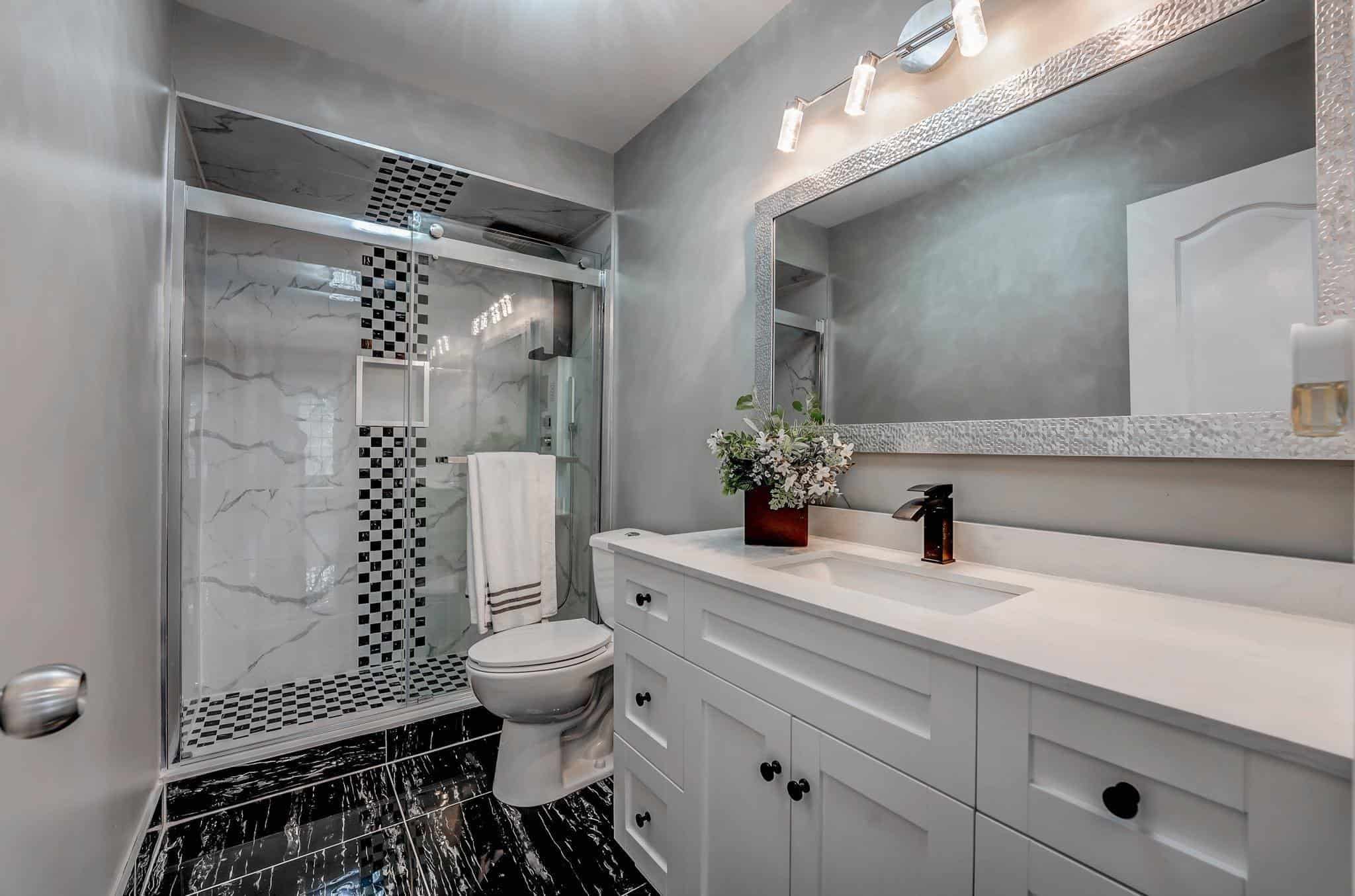
Picking the right paint is half the job. Applying it correctly is the other half. At ProEdge Painting, every bathroom and kitchen repaint starts with an inspection, not a paint chip. Our painting team checks for existing moisture damage, old caulk lines, and ventilation before a single can gets opened.
Here’s the plan we follow on every project:
Skipping any one of those steps is how a six-month paint job turns into a two-year mistake. It’s the reason so many bathroom repaints fail early.
What Happens If You Skip the Right Paint
Cutting corners on bathroom paint rarely shows up right away. It shows up later, and it costs more to fix than to do it right the first time.
Waiting doesn’t make any of this cheaper. It just moves the bill down the road, and usually makes it bigger along the way.
What a Properly Painted Bathroom Actually Gives You
When the sheen, prep, and ventilation are all handled correctly, the result is simple. Smooth walls. No bubbling near the shower. No dark spots creeping into the corners.
You stop thinking about your bathroom walls because there’s nothing left to think about. That’s the whole point of getting the sheen right the first time.
There’s a financial side to this, too. Homeowners in the Toms River area can typically expect a 5 to 10 percent increase in home value from professional interior painting. A bathroom with peeling paint or mold stains works against that value, no matter how nice the rest of the house looks. Getting the sheen right the first time protects the room and the investment behind it.
